
Couples Therapy Near Me: 5 Effective Options
Updated: Sep 18

Searching for "couples therapy near me" frequently yields lengthy directories of providers with scant information about what each clinical approach actually entails. To support an informed decision, we examine several major evidence-based therapy models and the populations they best serve. The five approaches below are presented even-handedly, each grounded in research rather than guesswork, so you can weigh which best matches your circumstances.
Table of Contents
1. Emotionally Focused Therapy for Couples
Emotionally Focused Therapy (EFT) is among the most rigorously researched couples therapy models. Grounded in attachment science, it helps partners identify the self-reinforcing negative interaction cycles that perpetuate distress. By accessing the vulnerable emotions underlying those cycles, couples can restore trust and a felt sense of security. Johnson's EFT outcome studies have demonstrated robust and durable gains for distressed couples, situating the model firmly within the empirical mainstream.
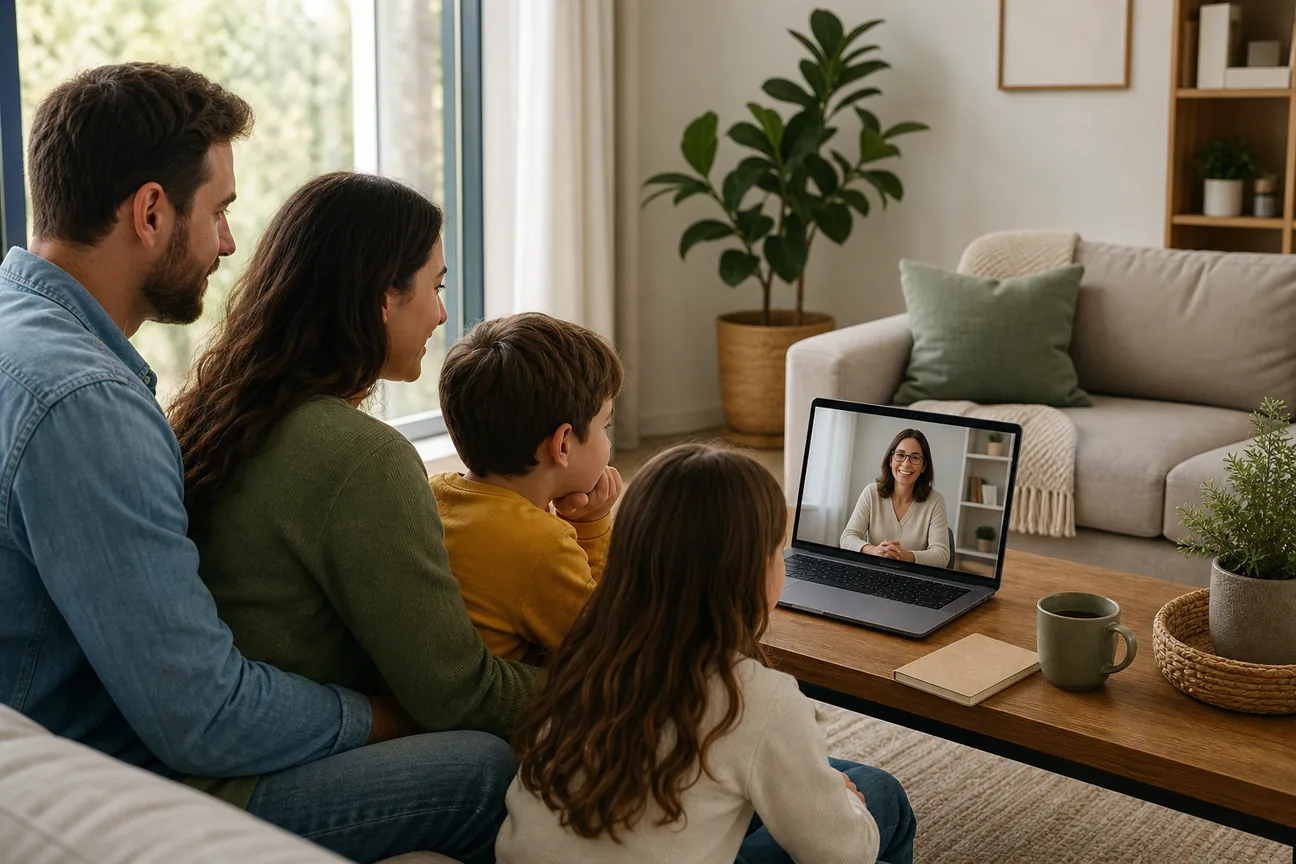
At Fostering Growth and Cooperation , we integrate EFT with complementary evidence-based tools, including the Gottman Method, Dialectical Behavior Therapy (DBT), and attachment-informed interventions. We also incorporate anthropological and ancient-wisdom perspectives that broaden the conventional clinical frame. Our practice accepts Aetna, Quest Behavioral Health (via Headway), and Anthem, and offers care in person, by video, and through online program delivery.

Key Takeaway:EFT achieves a 70–75% success rate in moving couples from distress to recovery, and Fostering Growth and Cooperation is one example of a Cincinnati practice that integrates EFT with additional evidence-based modalities and transparent insurance options.
Who it's for: Couples caught in pursue-withdraw dynamics, those recovering from infidelity, and anyone seeking to deepen emotional connection. Caveat: EFT requires both partners to be willing to explore vulnerable affect; it is less appropriate where active abuse is present.
Find the #1 thing you can do to improve your relationships with this fast, clinically-backed assessment you can complete in just 2 minutes. Start the assessment here.
2. The Gottman Method: Research-Based Relationship Skills
The Gottman Method is built upon decades of longitudinal observational research into what distinguishes stable, satisfied partnerships from those that dissolve. It targets conflict regulation, friendship, and the cultivation of shared meaning.

The model teaches concrete competencies such as the "softened startup" and "repair attempts" to de-escalate conflict before it spirals. It also helps partners build "Love Maps"—a detailed, evolving knowledge of each other's inner world. Gottman and Silver's longitudinal findings inform the Sound Relationship House framework, which provides couples a coherent developmental roadmap.
Who it's for: Couples who favor structured, skill-based learning and who are navigating everyday conflict, co-parenting strain, or communication breakdowns. Caveat: Where contempt is pervasive, treatment must first address entrenched hostility before skills training can take hold.
For more on breaking negative cycles, read how couples can break negative relationship cycles by focusing on shared goals and personal control .
3. Attachment-Based Couples Therapy: Healing Through Understanding
Attachment-Based Couples Therapy draws on Bowlby's attachment research, which holds that the early bonds we form with caregivers shape the templates through which we relate to romantic partners across the lifespan. Within this framework, couples learn to identify and articulate the underlying attachment needs—particularly for safety and security—that so often drive conflict. As partners come to understand one another's attachment styles, they can move from blame toward empathy, gradually constructing a more secure bond.
The work centers on interrupting negative cycles in which one partner's protest behavior provokes the other's withdrawal. Rather than treating conflict as a problem to be eliminated, it is reframed as a signal of unmet attachment needs. This reframing invites partners to respond with curiosity in place of defensiveness.
Who it's for: Couples who wish to deepen their emotional connection and understand the recurring patterns that keep them stuck. Caveat: It requires both partners to be willing to look inward and communicate with vulnerability, which can be demanding for those accustomed to avoiding emotion.
4. Cognitive-Behavioral Approach: Restructuring Patterns
This approach examines the reciprocal links among thoughts, emotions, and behaviors. Clinicians help couples identify unrealistic expectations, distorted attributions, and maladaptive communication habits that accelerate conflict.
Common techniques include cognitive restructuring, communication training, and behavioral exchange. Partners learn, for instance, to express needs without blame and to increase positive interactions through deliberately planned shared activities. The approach is concrete, measurable, and goal-oriented.
Who it's for: Couples who prefer a structured, problem-solving orientation, particularly when one partner also contends with anxiety, depression, or anger dysregulation. Caveat: The approach may underaccess deeper affect when couples are avoidant of emotion; integrating complementary modalities can address this limitation.
5. Values-Based Connection Therapy
This approach employs mindfulness and values clarification to help couples accept difficult emotions rather than struggle against them. Partners learn to act in accordance with shared values—kindness, intimacy, teamwork—even when triggered. By orienting toward what matters most, couples can rebuild connection instead of becoming ensnared in control battles.
The model emphasizes psychological flexibility: the capacity to remain present and to choose responses aligned with one's values. Techniques include guiding metaphors, mindfulness exercises, and committed action plans.
Who it's for: Couples who feel locked in reactive patterns and wish to shift toward acceptance and purposeful behavior. Caveat: The method may be less familiar to some clinicians; locating a properly trained practitioner is essential.
6. Comparison of Couples Therapy Approaches
Each model carries distinct strengths, yet the appropriate fit depends on a couple's particular circumstances. The table below summarizes the principal distinctions to support your decision.
Approach | Core Focus | Key Technique | Best For | Evidence Strength |
EFT | Attachment bonds | Enactments, cycle mapping | High reactivity, affairs | Strong RCTs |
Gottman | Conflict patterns, friendship | Softened startup, Love Maps | Skill gaps, co-parenting | Strong longitudinal |
Insight-Oriented Therapy | Early relationships | Guided dialogue | Repetitive patterns | Supportive case studies |
Cognitive-Behavioral Therapy | Thoughts and behaviors | Restructuring, skill building | Anxiety, depression | Controlled trials |
Acceptance-Based Therapy | Values and mindfulness | Mindfulness, committed action | Rigidity, control issues | Emerging evidence |
When weighing options, consider factors such as insurance coverage, delivery format, and therapist training. Lebow and colleagues' meta-analytic review underscores that integrative, evidence-based practice tends to yield the most reliable outcomes. Practices that combine multiple modalities—such as Fostering Growth and Cooperation —offer flexible, integrated care. For couples paying out of pocket, out-of-network billing tools can simplify reimbursement.
Frequently Asked Questions
How do I find couples therapy near me that takes insurance?
Begin by reviewing provider websites for accepted plans. Fostering Growth and Cooperation lists Aetna, Quest Behavioral Health, and Anthem. You may also contact your insurer directly and request in-network couples therapists in your area.
How much does couples therapy cost?
Costs vary by provider and location, and many therapists bill per session. Some offer sliding-scale fees. Fostering Growth and Cooperation provides self-pay options and accepts insurance, which can meaningfully reduce your out-of-pocket expense.
How long does couples therapy typically last?
Most models recommend 12–20 sessions. EFT frequently shows results within 12–20 sessions, while the Gottman Method's structured protocol may take 12–16. Duration depends on the severity of presenting issues and the couple's commitment to practicing between sessions.
What's the difference between EFT and the Gottman Method?
EFT centers on emotional bonding and attachment, working with raw feeling in the present moment. The Gottman Method is more skill-based, teaching communication and conflict-management tools. Both are highly effective, and some practices, including Fostering Growth and Cooperation, integrate them.
Can couples therapy help if only one partner is willing?
Yes, though progress may be slower. A skilled therapist can help the willing partner adopt new responses that shift the relational dynamic. When both partners participate, outcomes are typically stronger.
Conclusion
The most effective couples therapy near you is the one that matches your specific needs—whether emotional reconnection, practical skills, or deeper relational healing. Fostering Growth and Cooperation in Cincinnati offers an integrative blend of EFT, the Gottman Method, DBT, and ancient-wisdom perspectives, alongside transparent insurance and flexible formats.Find the #1 thing you can do to improve your relationshipswith this fast, clinically-backed assessment you can complete in just 2 minutes. Start the assessment here to see whether their approach fits your situation.
References
Bowlby, J. (1988).A secure base: Parent-child attachment and healthy human development. Basic Books.
Fishbane, M. D. (2013).Loving with the brain in mind: Neurobiology and couple therapy. W. W. Norton & Company.
Gottman, J. M., & Silver, N. (1999).The seven principles for making marriage work. Crown Publishers. (Reissued 2015, Harmony Books.)
Johnson, S. M. (2004).The practice of emotionally focused couple therapy: Creating connection(2nd ed.). Brunner-Routledge.
Lebow, J. L., Chambers, A. L., Christensen, A., & Johnson, S. M. (2012). Research on the treatment of couple distress.Journal of Marital and Family Therapy, 38(1), 145–168.


Comments